
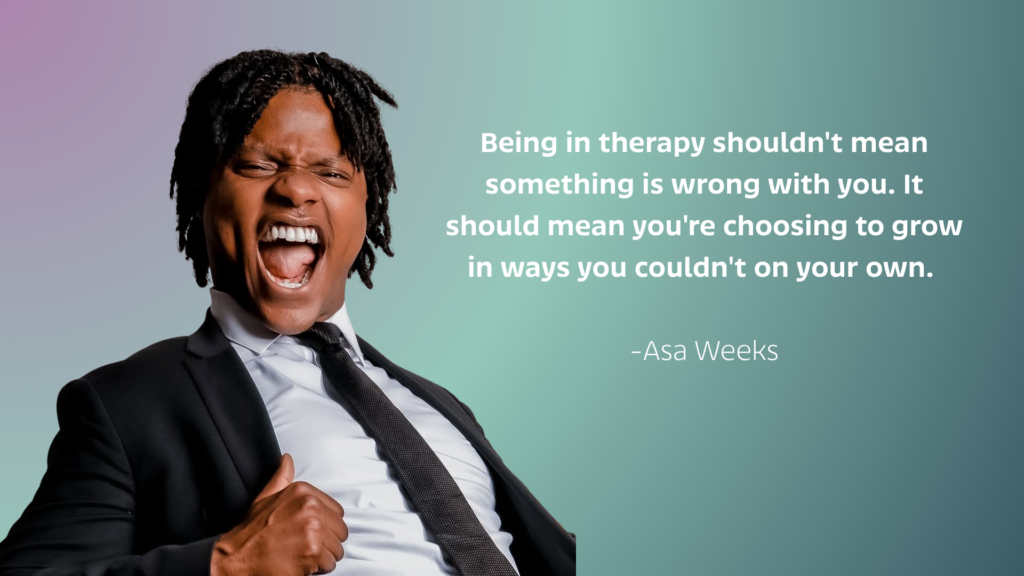
If you joined us at this year’s Catoctin Affair or have spent time in downtown Frederick, chances are you’ve seen Asa Weeks doing what he does best: bringing energy to every room he’s in. As a Frederick musician, performer, and natural entertainer, he’s known for being outgoing, energetic, and full of life.
Behind that confidence, though, Asa wanted to better understand himself. Earlier this year, he made the decision to start therapy, not because something was wrong, but because he wanted to grow. His story is a reminder that therapy isn’t just for moments of crisis; it can also be a powerful tool for self-awareness, personal growth, and showing up more fully for yourself and the people around you.
In this interview, Asa shares his mental health journey and what he’s learned along the way.
Why did you start therapy?
As I got into my adult years, I started noticing things about myself and wondering what it would be like to talk to a professional about what was going on in my life. I wanted to learn more about myself so I could show up better in my relationships and become a better version of myself.
The second reason was that I knew there were things I experienced growing up. Everyone has their own fair share of trauma. I didn’t think those experiences had affected me drastically, but I wanted to explore them and understand how they might be showing up in my adult life. I think that’s one of the biggest things therapy can do. You learn something about yourself that you never even considered before, and it makes you ask why and how.
What has surprised you about starting therapy?
I thought I’d go to therapy, have sessions, answer questions, and be told what to do. Kind of like going to the doctor. You tell them what’s wrong, and they give you a solution. Therapy isn’t like that.
You have to bring what’s going on inside of you. It takes a certain level of self-awareness, honesty, and openness for it to be effective. You can go and vent if that’s what you need, but if you really want growth and progress, you have to be willing to explore parts of yourself that might be uncomfortable.
Therapy is a space you create for yourself, and what you get out of it depends on how willing you are to show up honestly.
How do you see stigma in your community play a role with people seeking help?
I think the first assumption people make when they hear someone is in therapy is that something must be wrong with them mentally. That keeps a lot of people from seeking help or even talking about it because they think, “If I’m in therapy, I must have something I need to fix.”
The narrative needs to change. Being in therapy shouldn’t mean something is wrong with you. It should mean you’re choosing to grow in ways you couldn’t on your own.
In my community, and especially as a man and as a Black man, there are additional barriers. A lot of people don’t have access to therapy because it’s expensive without good insurance.
The other challenge is that men aren’t often asked how they’re feeling or how they’re processing what’s going on in their lives. We’re expected to deal with problems, fix things, and be the emotional backbone for everyone else. If you’ve never felt safe exploring what’s going on in your own mind, it’s hard to take that first step toward therapy unless you’re already in a reactive situation.
What would you say to someone looking to start therapy?
Seek support from the people around you. If you know people who have done therapy or are currently in therapy, ask them questions. Be curious. Ask them how they got into it, what they’re learning, and how it’s going.
If you’re going to start, try to be as honest as you possibly can. We all have thoughts that stay in our heads because we don’t always feel comfortable saying them out loud.
It’s not even that the thoughts are good or bad. We all have things we think about that we don’t bring up because we’re worried about how people might react or what they’ll think of us. Therapy gives you a place where your brain can simply express and be. There’s power in having a space where you can talk about what you’re truly feeling without being afraid of what someone might think.
What have you gained already from starting therapy?
For someone to step into a new journey and say, “I’m going to start therapy and do this work for myself,” I think that’s one of the biggest forms of self-love you can show yourself. It’s also one of the biggest forms of accountability to yourself and to the people around you.
Without taking the time to look inward and ask, “How can I be better? How can I grow? How are the things around me affecting me?” You’re really just at the mercy of whatever happens to you. Therapy is a way of taking control of your own growth instead of just reacting to life.
For someone who doesn’t know where to start, especially here in Frederick, we have organizations like the Mental Health Association, wellness centers, and a good network of support in the area. If you’ve ever thought about it, give it a chance. You’ll learn things about yourself that you didn’t know you didn’t know, and in doing that, you find more peace with yourself.
I’ve only been in therapy for about six months, and I’m already seeing the difference. I’m better able to articulate my feelings, and I’ve learned that my emotions are one thing, but what I choose to do with those emotions is another. Therapy has given me the tools and the perspective to connect those emotions with how I’m showing up in my life, how I’m responding to situations, and how I’m showing up for the people around me. That’s probably the biggest thing I’ve gained from it.